Wrapping up the year 2022, I want to end with a piece of work that is unfinished and at the same time only just beginning. The question whether it is time to rethink the principles underlying business strategy. Does strategy even need a new name?
There are three pillars at the center of my thought-leadership work: leadership, culture and strategy. For me these represent the symbol of integration, that 3-legged stool often used within different concepts – think (strategy), feel (culture), do (leadership). I see the future of these being grounded in daring leadership, an abundance mindset and collaborative narratives.
There is significant awareness how organisational culture is the engine driving success, there is awareness that the main lever shaping the culture is leadership behavior and also which behaviors foster a courageous culture enabling innovation, change and creativity. Yet, strategy – well I see yet little work digging back to the roots of strategy and questioning the engrained concept of strategy being grounded in competition, beating others and winning.
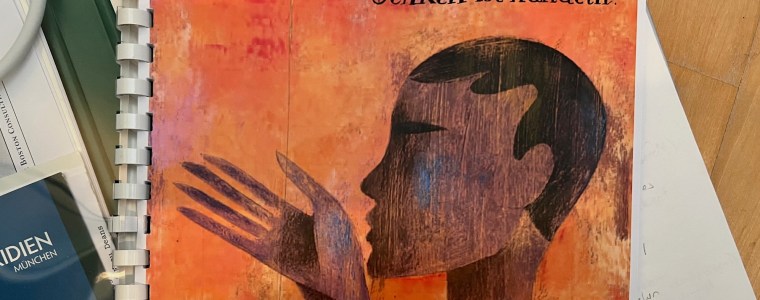
If you go back to the roots of the well-known strategy consultancy, where I had a great experience starting my path into corporate strategy work – the Boston Consulting Group – you will find the classic text by Bruce Henderson on “The origin of strategy”. He was fascinated by the work of Darwin regarding evolution, competitive advantage and survival of the fittest. Bruce Henderson developed a theory to compare natural selection with business, which was grounded in assumptions around having to compete for limited resources. And he saw businesses having the human advantage of adding strategy to the moves they make, “primates possess imagination and the ability to reason logically“. For him using strategy could be revolutionary and faster, versus the slower natural selection of evolution. So far quite interesting..
Yet, this is what I see as complications. Bruce Henderson grounded a lot of his theory into the similarities regarding limited resources. When looking at this for business he talks around the following resources: “The characteristic fundamental resource segments for business are sources of: money, either in capital or in ongoing revenue; suitable skills, abilities and individuals on an ongoing basis; materials, supplies, energy, components not contained within the organization; and knowledge and communication capability with respect to all external resources and factors affecting their availability.“
There is no consideration here for planetary limits that all businesses (and species) are bound to. Although he touches upon boundaries at other points in his writing, it is not further considered regarding the competition situation. Is that what may have led us to the situation we are in today?
Bruce Henderson himself adds the following about the observations of natural competition: “Except for the most elementary forms of life, the required resources are other forms of life or activity. This establishes a form of vertical equilibrium. The higher levels prey on the lower levels but cannot live without them. Excessive success is self-defeating.“
Excessive success is self-defeating. Yes – so potentially the excessive success of the business principles of the last 30 years have been exactly that: self-defeating, to the point that we are at risk of destroying the basic resources required for all species, including us humans.
Is there an alternative? Can we again look to nature? As clearly despite the ongoing natural competition our planet has been able to be regenerative over a long period of time before humans came along with their ability for strategy.
Yes, I believe we can. If you consider natural selection I can see two differences to think about:
- The species are geared towards survival, they are not geared towards ‘winning’ or ‘beating’ other species. That is about mindset, if you like.
- Nature often moves to a state of cooperation, which allows the most benefit outcome for the different species and organisations in an ecosystem. Elisabet Sahtouris has written extensively about this and I will be coming back to her work.
So when you are next looking for input on your strategy, looking at the websites of leading business schools on their strategy principles and executive education – pay attention to the language used. Ask yourself is the goal truly to win and beat other companies, organisations and markets? Or is it time to shift up a maturity level also with our strategy principles and re-consider what real success on a people, planetary and profit basis can look like.
Taking one more quote from Bruce Henderson – maybe it is time to go back to his starting point on what makes strategy possible and pay attention the effects of alternative actions.
“For strategy to be possible, it is necessary to be able to imagine and evaluate the possible consequences of alternate courses of action. But imagination and reasoning power are not sufficient. There also must be knowledge of competition and the characteristic higher order effects of alternative actions.“
Let us be courageous, start changing our mindset, allow for different language in our strategy workshops and consider new definitions of successful outcomes.
Look out for more on this topic in the new year. Share your thoughts with me. And look after yourself – also on an individual level it may be time to let go of having to be more extra-ordinary than the next person. Be you. You are enough. And thanks for your time to read this.
Sources for all quotes in italics are taken from Bruce Henderson and the following two publications:
Bruce Henderson, The Origin of Strategy, Harvard Business Review, 1981
Bruce Henderson, The Concept of Strategy, BCG Publications, 1981








 amdeans-consulting.com