
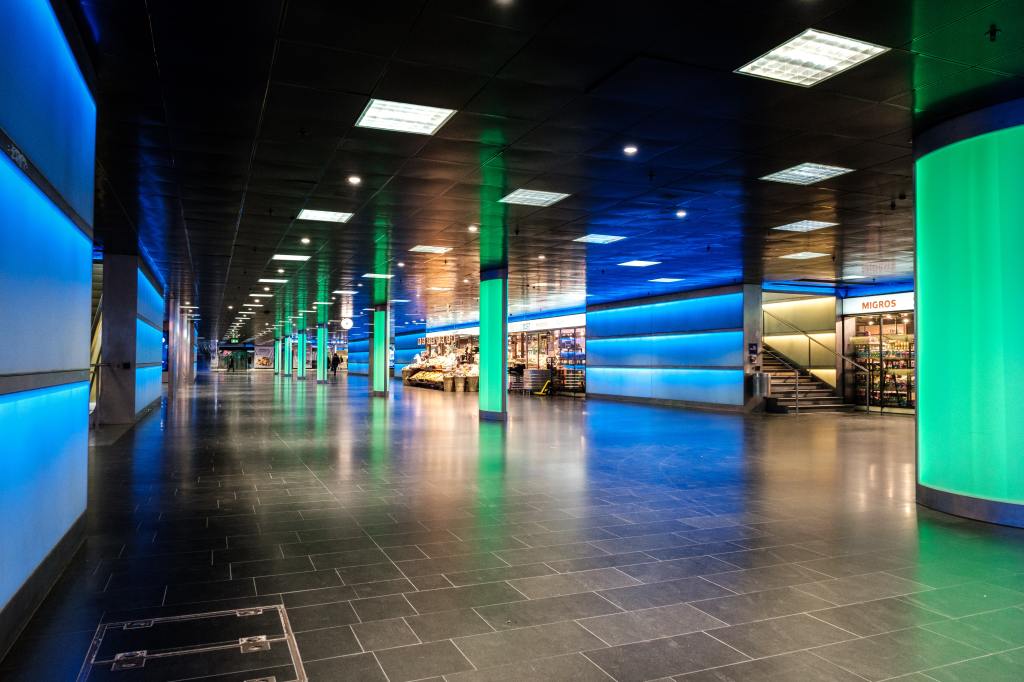
Zürich SBB train station. Photo by Patrick Robert Doyle on Unsplash
The results from a new study recently caught my eye “Assessing the social interactions and happiness of over 50,000 people reveals that interacting with a more diverse set of relationship types predicts higher well-being.” (1)
And this is what I concluded from that additional piece of research findings:
- For Individuals: Treat others with generosity, care and curiosity. It’s good for your well-being, their well-being and it’s good for our societies.
- For business – your investments: Be bold and include well-being (people) impact within your cost/benefit analysis for investment decisions, particularly if you offer a ‘Service public’ and receive public funding. Get creative and work out how to do this. If we want to change how we do business, we have to upgrade our ROI and NPV calculations.
- For business – your processes: Check if your internal processes reward or penalise behaviours that link with the this value-add if you do see it as part of your business case and values (eg. is the time required to interact with the customer factored in or penalised as ‘inefficient’. Do you actively maintain a level of interaction or ask your employees to ‘nudge’ customers to do the interaction online by themselves?)
- For business – your employees: Confirm if you are providing your employees with the skills for grounded confidence to show up with kindness and curiosity. It is not something that comes naturally as we have been taught to worry more about ‘what people might think’, yet there are skill sets that can be learned.
In case you ask, why be interested in well-being? Well, it is in all our interest to be a society with individuals who are well and can look after ourselves, our families, our communities and contribute to our institutions (incl. business) with energy, ideas and focus.
I have provided my conclusion up front, now let’s look at this research and findings a little closer. Clearly by now we know that having social interactions benefits our well-being, and on the contrary loneliness is a key indicator for health problems and earlier mortality (3). Yet, the research so far has not been clear on what type of social interactions to aim for. This new study (1) from which I quote above indicates there is a benefit if you have not only close relationships to interact with (think partner, family, friends) but if you have a diverse set of social interactions.
So where do these diverse interactions occur? The following comes to my mind: There’s the obvious – your neighbours, colleagues and people you meet in sports, music or arts clubs. And then there’s the slightly less obvious such as other parents at a playground, the people working in supermarkets, post offices, retail or the conductors on trains checking your tickets. And then there are also the people you speak to to organise your life at doctors offices, government offices, banks, etc.
This is what strikes me. I have spent many years in the corporate world calculating NPV of investments and assessing business cases. I look around today and see a major drive to close ‘costly’ structures, which are often those where real human interaction occurs and the goal is to digitalize it in some shape or form. That is the group of people (and hence interactions) mentioned up there as those we interact with at shops, post offices, on public transport. And I just have to wonder if these are decisions, we (we being as a society) will regret when we have to artificially rebuild ways for diverse human interactions to happen with the intent to ensure well-being (that is once we truly recognise that it is not only financial performance we are after with our businesses). I have to ask myself if we are doing enough in redesigning our business case assessments to capture the value we seek to add and to get more serious about the triple bottom line to include people well-being?
In our current economic system, I do understand that a standard business may not see the reason to include well-being factors, which have no cashflow benefit for the immediate business, yet surely there must be ways to address this hurdle whilst rethinking our systems – particularly if we also want business to get more comprehensive regarding actual costs of which many will also not be direct but indirect. This change involves those setting strategic goals and direction recognising and wanting to generate this value – so investors, government, the board.
Yet, what comes to mind for me, is that particularly in Switzerland there is a unique opportunity to start and build experience and evidence. Why? Because in Switzerland the concept of ‘Service public’ exists for organisations close to government. This is a Swiss concept of services provided to the nation for the overall well-being and quality of life – it is at times given as exact KPIs (for example to the postal service) and at times left quite open to how it actually looks in practice (for example to the train service). My thought is when we look at a business case for the cost/benefit of let’s say running post offices, the cost for people checking our tickets on trains, those selling us a train ticket or bringing our post package to the door – as to what a friendly smile, a welcoming ‘how can I help you?’ or a sincere ‘how are you today’ may influence both individuals wellbeing and hence a value put towards it when looking at the financial case of keeping these services.
Clearly, it cannot be impossible to factor in this indirect benefit. In the health sector we have been practicing using calculations around ‘QALY’ indicators to establish a pharmaceutical price for many years. And I am of the opinion we have to get brave and try factoring something similar in to other business cases as long as we prioritise financials for decision making, before we might close services based on a cost/benefit analysis leaving out some of the benefits to your people and societies.
The research around social interactions and well-being is backed up by studies into kindness, for example research by Gillian Sandstrom shows talking with a stranger “in the majority of cases both parties report enhanced wellbeing and a boost to their mood.“(2). An interesting add from this research on kindness and the article authored by Claudia Hammond is regarding what most often gets in the way of this kindness and interaction. Two main factors have been identified 1) a fear of the act of kindness being misinterpreted and 2) not having enough time. I believe the first part is due to our conditioning of ‘what do people think’ and fear of not belonging, so building daring leadership skills builds our grounded confidence around this, and on the second point, well, clearly we all have to slow down a little and show up for each other.
At the organisational level there is an additional aspect. It means that if we factor in the added-value of our employees interacting with their customers in our business cases, we also have to ensure we do not penalise them for the time that it requires and support them with building skills for their own confidence and curiosity to be the person taking the first step in an interaction and so they can also handle when in rare situations the response will be a rude reply rather than a grateful kind interaction.
With that I invite you back to my conclusions at the beginning and I’d love to know if you have great case studies where these types of benefits are getting factored into investment decisions.
Sources:
- Relational diversity in social portfolios predicts well-being. Hanne K. Collinsa, Serena F. Hagerty, Jordi Quoidbach, Michael I. Norton, and Alison Wood Brooks. PNAS. Edited by Jonathan Gershuny, University College London, London, United Kingdom; received November 12, 2021; accepted September 6, 2022.
- Why we all need to be a lot less hesitant about being kind, The Guardian 13.11.2022, Claudia Hammond
- Rico-Uribe LA, Caballero FF, Martín-María N, Cabello M, Ayuso-Mateos JL, Miret M. Association of loneliness with all-cause mortality: A meta-analysis. PLoS One. 2018 Jan 4;13(1):e0190033. doi: 10.1371/journal.pone.0190033. PMID: 29300743; PMCID: PMC5754055.
 amdeans-consulting.com