
BCG, the strategy consulting firm, is going deep into the topic of Trust at this year’s WEF in Davos and have published a new report, in which they present a newly developed trust index. You can find the full report here.
Five immediate reflections below to the report, as I find there are interesting details hidden in this big scale research and at the same time it raises questions:
1. Good news for those of us who believe trust is important. They find a strong correlation of their way to assess trust with above-average total shareholder return, better post-crisis performance and higher ESGC scores – so investors will also be paying attention. But oops – a “significant portion of the largest companies received consistently low-trust scores” – plenty to do then!
2. The overall finding confirms how fickle trust is – slow to build, quick to destroy. It is very variable which firms were in the top 100 list over a time span of 4 years. But those who do stay show strength in looking after their people, good governance, strength in collaboration and innovation. And unsurprisingly they deliver on their products and promises. I’d love to see the list of these 20 companies and look closer at how their leadership team looked within that time span.
3. A whole report on trust without talking about care, integrity, values. These topics are hidden to a certain degree within BCG’s indicator of ‘Fairness’. Yet is still surprising given how these are weighted in other trust frameworks to not see them get more coverage. I disagree with this being purely ‘systemic trust’. Personally, I believe there needs to be more courage to include these more ambiguous and hard to measure aspects of trust and leadership.
4. Measuring topics has pro’s and con’s. The BRAVING Trust framework from Dare to LeadTM also comes with an assessment. So yes a Trust Index will draw attention to strengths/weaknesses and allow a degree of comparison. Yet if it is handled as primarily a KPI on a dashboard to ‘perform’ against, rather than truly integrate it into leadership behaviour, it may turn into exactly that – a performance. And I would not be surprised if that could send your trust-index score shooting right down..
5. Finally – did I miss it? What about looking a little closer at governance and the leaders. Did those with high scores have a stable consistent leadership team, that built and maintained trust by operating with clear values and integrity? How does it match with BCGs diversity score or their innovation rankings?
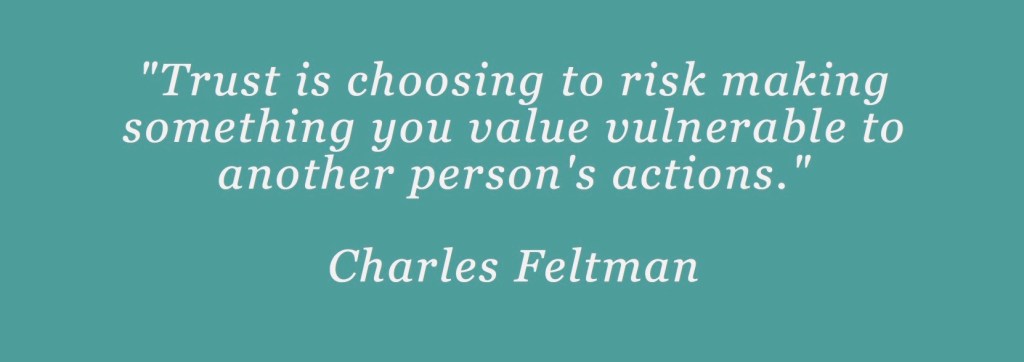
My work on the topic of ‘Trust’ is based on the research findings by Dr. Brené Brown and the work by Charles Feltman, and I continually integrate additional research and findings. For sure I will be following this ongoing work by BCG closely.
Most importantly – this research confirms the significance and value of investing in trust. Trust is a skill that can be learnt. It has to be maintained with continuous attention to the elements that define trust and addressing what gets in the way of trust in a safe manner. Trust will only be meaningful if leadership from the top truly stands behind their purpose, lives their values with empathy and with humility holds a true stakeholder focus which goes beyond ego, profit and financial returns.
My conclusion? Before adding a new KPI to the dashboard, I would take the money to invest in leadership skills such as those for Daring Leadership, ensure values have clear behaviours to operate by, and have the courage to move from a narrow profit-/performance-based dashboard to a wider collaborative, stakeholder and long-term perspective of success.
Source: What AI Reveals About Trust in the World’s Largest Companies, May 2022, BCG
 amdeans-consulting.com